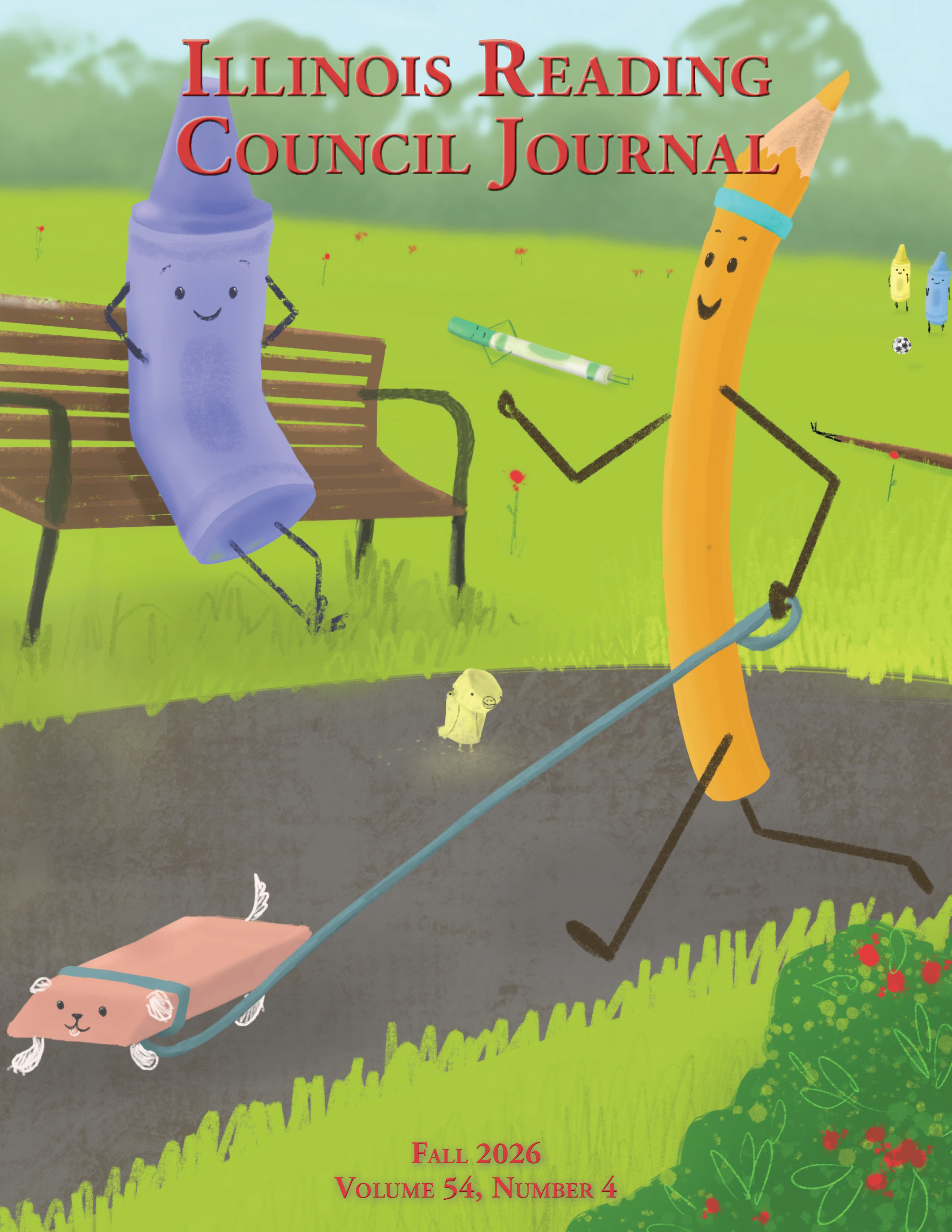
Fall 2026 Volume 54, Number 4
 |
Tackling Tricky Topics in the Classroom: Strategies to Engage with Students
By Lauren Fischer
Document: Article
Introductory Paragraph: As I was writing my middle-grade novel Orphanland, I was thinking about narrative privilege—I just didn’t realize it. Joanna Ho (2023), author of The Silence that Binds Us, introduced this term in her recent online article in School Library Journal: Many kids—especially those from historically marginalized communities—live in a world that intentionally erases or distorts their realities. They want stories that tell them, in no uncertain language, that they are beautiful, worthy, and important. They need stories that subvert dominant narratives and teach them they can create change. The truth is, kids who grow up with narrative privilege probably need these stories about others even more. (para. 16). In other words, kids who grow up with narrative privilege have an easier time finding books portraying characters whose identities and life circumstances are similar to their own than do readers without narrative privilege. All readers need books about diverse perspectives and differing realities. As Dr. Rudine Sims Bishop (1990) wrote, “Children from dominant social groups have always found their mirrors in books, but they, too, have suffered from the lack of availability of books about others. They need the books as windows onto reality” (para. 5).
DOI: https://doi.org/10.33600/IRCJ.54.4.2026.22
Page Numbers: 22-28
|
The Illinois Reading Council Journal is available for IRC Members. If you are a current member, please watch your mail and/or email for the current issue to arrive.
Not an IRC Member? A highlighted version showing the current issue's table of contents is available online for your viewing. You can become an IRC Member and order a current copy of the IRC Journal by calling the IRC office at (309) 454-1341 or join online today to receive future issues!
|